Memoir
Before I Forget.
The Child Who Was Still Waiting for Me
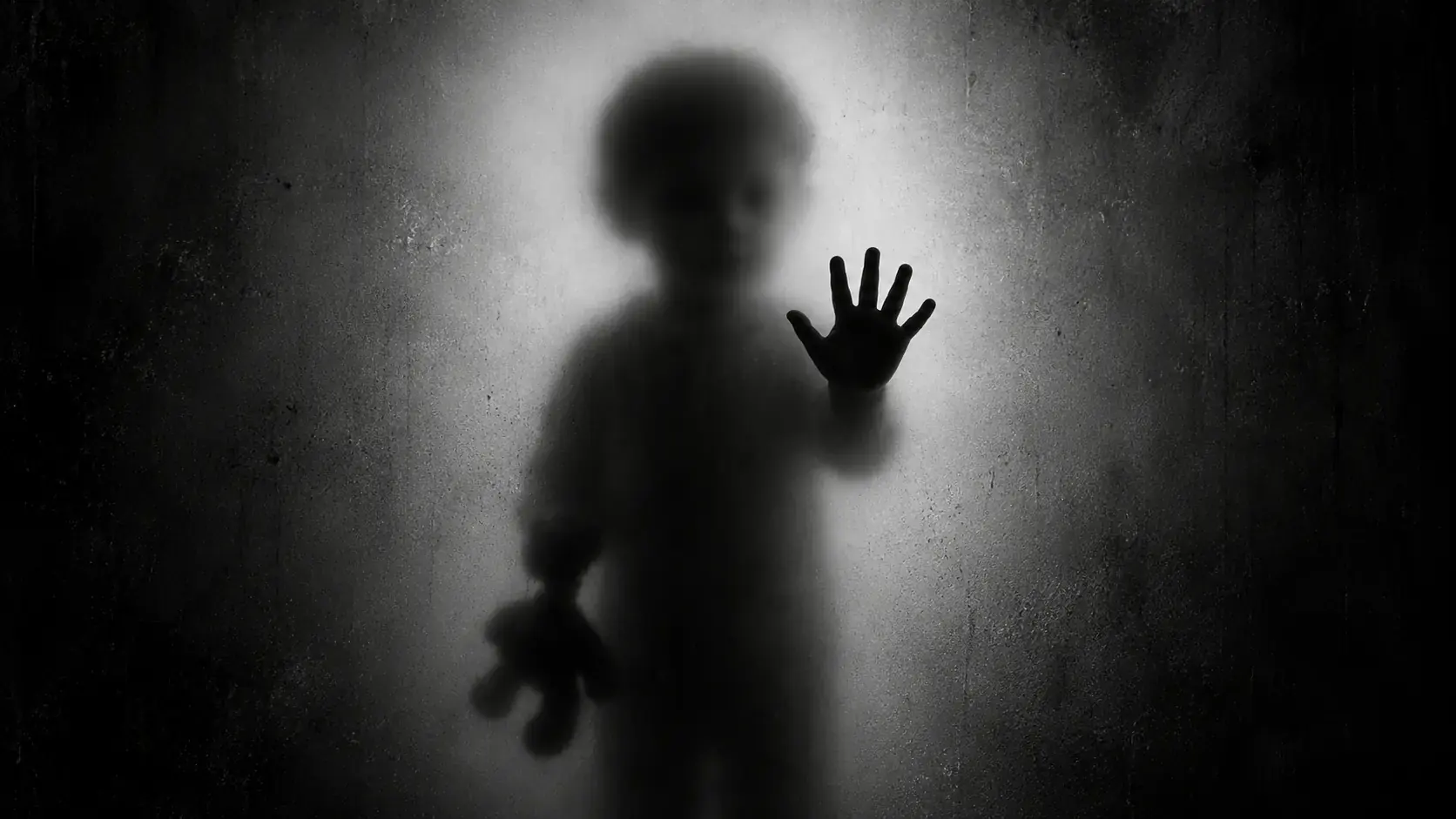
There are photographs that record a moment, and then there are photographs that quietly preserve a person who no longer exists in quite the same way.
I think this is one of those photographs.
I found it after almost twelve years of my life had somehow disappeared from my memory.
Not literally, of course. I remember things. I remember enough to know that those years were full of life. Marriage. Children. Work. Jobs. Business. Ambitions. Failures. Responsibilities. Losses. Family. Arguments. Love. Disappointments. The long, exhausting mathematics of trying to keep a life together. The death of my mother. The strange years of COVID. People arriving, people leaving, relationships changing shape, dreams becoming obligations and obligations becoming survival.
So much happened.
And yet, when I look back, those twelve years feel strangely empty.
As though someone took a thick black marker and drew a line across the most important pages of my life.
The good memories, the bad ones, the beautiful ones, the unbearable ones, the victories, the humiliations, the ordinary afternoons that should have meant nothing but somehow meant everything, the people I loved and the people who hurt me. Almost all of it has been swallowed by time.
Perhaps that is what happens when life becomes too heavy.
We stop living it.
We begin surviving it.
For years, I thought I was simply becoming stronger. I did not understand that strength, when demanded of us every single day, can slowly make us forget the softer parts of ourselves.
The part that laughed easily.
The part that trusted without calculating the consequences.
The part that could find happiness in something as insignificant as a toy, a sunny afternoon, a sweet, a bicycle ride, a birthday, a photograph.
The part that did not need a reason to be happy.
I look at this photograph now and wonder when I lost that child.
He is sitting on a wooden rocking horse, dressed in a little striped sweater, looking directly into the camera with those wide, astonished eyes. There is no burden in that face. No suspicion. No knowledge of betrayal. No understanding of loss. No awareness of how complicated life can become.
He is simply there.
Alive.
Curious.
Happy.
And perhaps that is what breaks my heart the most.
He had no idea what was coming.
Neither did I.
The photograph was taken in 1982, when I was a child and photographs were still something that required an effort. There were no phones waiting in our pockets. No cameras always within reach. No thousands of photographs accumulating silently in a cloud.
If you wanted a photograph, you went to a studio.
Someone had to decide that the moment was worth preserving.
Someone had to take the trouble to dress the child, take him out, sit him before a camera and wait for that little mechanical click that would eventually become a piece of family history.
My mother did that.
I do not know what she was thinking that day.
Perhaps she simply wanted a photograph of her child.
Perhaps she knew, in that quiet instinctive way mothers sometimes know things without being able to explain them, that childhood disappears too quickly.
Perhaps she did not know at all.
But somehow, she took me there.
And now, decades later, that small decision has become one of the greatest gifts she ever left me.
Because when I look at this photograph, I do not only see myself.
I see her.
I see the world she belonged to.
I see a time when our family was still intact in ways I did not understand. A time before certain doors closed forever. Before certain people disappeared. Before adulthood began taking pieces of us one by one.
The photograph itself had aged badly. The paper had faded. Time had left its fingerprints on it. It had become fragile, imperfect, almost forgotten.
But it survived.
And sometimes I think that is what memories do.
They do not have to remain beautiful to remain precious.
They only have to remain.
I used AI to restore and upscale some of those old photographs, turning them into images that almost look as though they were taken yesterday. The technology can recover astonishing details: the texture of a face, the pattern of a sweater, the grain of an old studio backdrop, the expression in a child’s eyes.
But there is something technology cannot restore.
It cannot restore the day.
It cannot bring back the people who stood outside the frame.
It cannot return us to the room where the photograph was taken.
It cannot give us back the voice of someone who has died.
It can sharpen the photograph.
It cannot sharpen the past.
And perhaps that is why looking at these restored photographs has been such a strange experience for me.
I thought I was restoring photographs.
I was actually restoring memories.
For the first time in years, I began meeting people I had almost forgotten.
Not only the people in the photographs, but the people I once was.
There was the child.
There was the young man.
There was the person who believed that life would eventually make sense.
There was the person who laughed without checking whether he had a reason.
There was the person who had dreams that had not yet been negotiated with reality.
And then there was me, standing many decades later, looking at him.
I wanted to tell that child something.
I wanted to warn him.
I wanted to protect him.
I wanted to tell him that life would not always be kind.
That some people would disappoint him.
That some promises would not survive.
That love would sometimes hurt.
That family would become complicated.
That success would not always feel like success.
That losing someone you love can alter the architecture of your entire heart.
That there would be years when simply getting through the day would feel like an achievement.
That he would become harder than he ever imagined becoming.
That there would be moments when he would not recognise himself.
But I also wanted to tell him something else.
Do not lose this.
Do not lose that smile.
Do not become so busy fighting the world that you forget how to live in it.
I wish I had known how easily happiness can disappear.
We spend so much of our youth believing that the future is where life will finally begin. We wait for the next achievement, the next promotion, the next business, the next house, the next financial milestone, the next success, the next chapter.
And while we are busy preparing for tomorrow, today quietly becomes yesterday.
Then one day, we look around and realise that the people we were doing everything for have grown up.
Our parents are gone.
Friends have moved away or disappeared into their own lives.
Some relationships exist only as names in an old phone.
Some people we once spoke to every day have become strangers.
The house becomes quieter.
And somewhere in that quietness, memory begins speaking again.
I imagine that this happens to many of us, perhaps in our late forties or early fifties, when the great storm of life finally begins to lose its strength.
We sit somewhere quietly.
Perhaps it is an ordinary morning.
There is nothing remarkable about the light coming through the window. Nothing dramatic is happening. There is no great revelation waiting for us.
And then, without warning, a memory appears.
A school corridor.
A childhood friend.
A mother’s voice.
An old song.
A summer afternoon.
A bicycle.
A forgotten toy.
A photograph.
And suddenly we realise that we have lived two completely different lives.
One was filled with childhood, youth, innocence, possibility and an almost effortless capacity for happiness.
The other was built from responsibility, struggle, ambition, disappointment, loss, compromise and survival.
They seem so different that for a moment we wonder whether they could possibly belong to the same person.
And yet they do.
Both lives are ours.
Perhaps that is the strange bargain of being human.
We begin as children who believe the world belongs to us.
Then life teaches us that we belong to the world.
We spend years carrying responsibilities we never imagined we would carry. We fight battles nobody sees. We make choices with incomplete information. We lose people. We lose versions of ourselves. Sometimes we are betrayed. Sometimes we betray our own dreams. Sometimes we become harsh because softness has become too expensive.
And slowly, almost imperceptibly, the child disappears beneath the weight of the adult.
Until one day, an old photograph finds him.
That is what this photograph did to me.
It found me.
Not the man I became.
The boy I was.
He was still there, waiting patiently inside an old album that had survived nearly half a century.
He was still sitting on that wooden horse.
Still looking at the camera.
Still unaware of the world that would eventually ask so much from him.
And for a moment, I felt something I had not felt in a very long time.
I felt tenderness for myself.
Not pride.
Not regret.
Not judgment.
Just tenderness.
Perhaps we do not talk enough about that.
We spend our lives forgiving other people and almost never think about forgiving the person we ourselves became while trying to survive.
Maybe I need to forgive that man.
For becoming tired.
For becoming angry.
For becoming suspicious.
For forgetting.
For not always being gentle.
For allowing some memories to disappear because remembering them was too painful.
For becoming so occupied with surviving the storms that he forgot there had once been sunshine.
He was doing what he knew how to do.
He was trying to make it through.
And perhaps that is enough.
I cannot go back to 1982.
I cannot climb onto that wooden rocking horse.
I cannot hear my mother’s voice calling my name from outside the studio.
I cannot return to the world that existed behind that photograph.
We cannot go backward.
That may be the cruelest truth about time.
But perhaps there is another truth beside it.
We can go inward.
We can return, not to the place, but to the feeling.
We can sit with the child inside us for a while.
We can look at him without embarrassment.
We can remember that before we became fathers, husbands, professionals, businessmen, providers, fighters, survivors and all the other identities life eventually gave us, we were simply children.
Children who wanted to be loved.
Children who wanted to play.
Children who wanted to laugh.
Children who were happy simply because they were alive.
I look at this photograph and wonder whether that child would recognise me today.
I hope he would.
I hope he would look at my face and understand that I tried.
I hope he would forgive me for taking so long to come back.
And most of all, I hope I can still hear him somewhere inside me.
Not asking for success.
Not asking for money.
Not asking for recognition.
Not asking for another achievement.
Only asking for the simplest thing.
To be happy.
Just happy.
Perhaps that is what all our years ultimately teach us.
That happiness was never waiting at the end of the road.
It was there at the beginning.
We simply became too busy walking to notice it.
And sometimes, many decades later, an old photograph becomes a doorway.
We open an album.
We turn a page.
And there we are.
Still smiling.
Still innocent.
Still waiting.
Not for the past to return.
But for us to finally remember who we were before life taught us to forget.
Today, when I look at that little boy on the wooden horse, I do not feel that I have lost him.
I feel that I have found him again.
And perhaps, after everything, that is enough.
Because the child did not disappear.
He was only waiting for me to come home.